1.系统架构
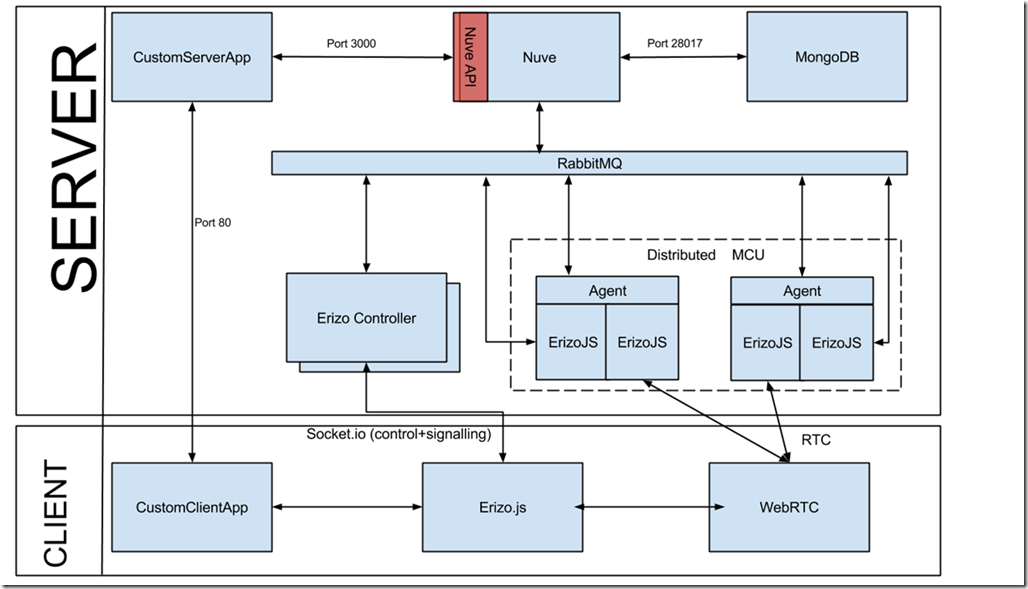
(来源:https://github.com/lynckia/licode/issues/335)
2.nuve模块
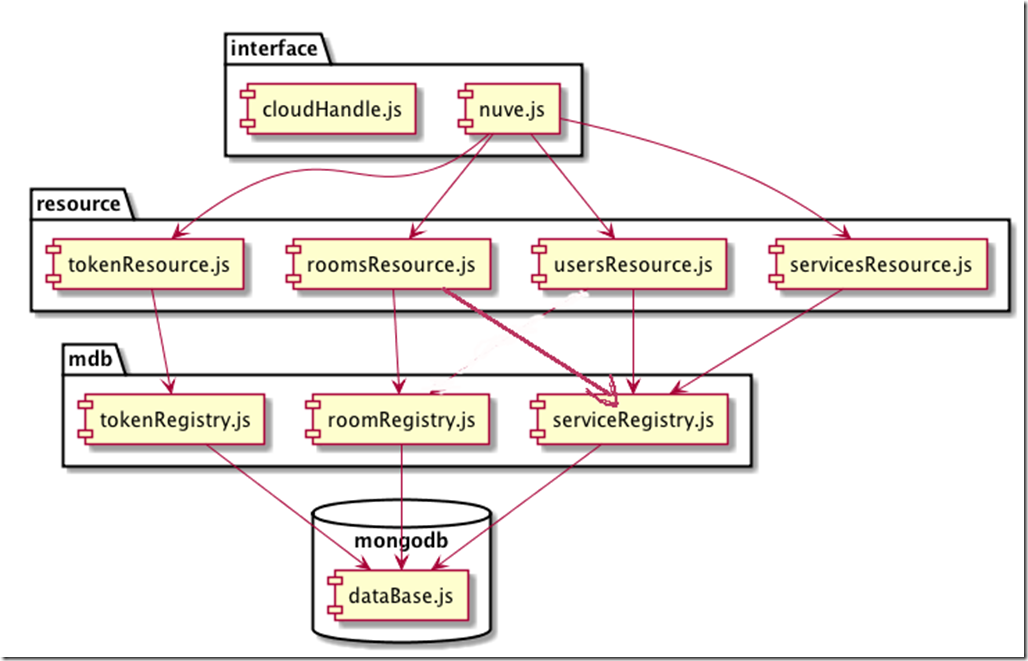
(修改:https://blog.csdn.net/u012908515/article/details/53940787)
app.post('/rooms', roomsResource.createRoom);
app.get('/rooms', roomsResource.represent);

app.get('/rooms/:room', roomResource.represent);
app.put('/rooms/:room', roomResource.updateRoom);
app.patch('/rooms/:room', roomResource.patchRoom);
app.delete('/rooms/:room', roomResource.deleteRoom);

app.post('/rooms/:room/tokens', tokensResource.create);

app.post('/services', servicesResource.create);
app.get('/services', servicesResource.represent);

app.get('/services/:service', serviceResource.represent);
app.delete('/services/:service', serviceResource.deleteService);

app.get('/rooms/:room/users', usersResource.getList);

app.get('/rooms/:room/users/:user', userResource.getUser);
app.delete('/rooms/:room/users/:user', userResource.deleteUser);
2.1签名验证
app.get('*', nuveAuthenticator.authenticate);
app.post('*', nuveAuthenticator.authenticate);
app.put('*', nuveAuthenticator.authenticate);
app.patch('*', nuveAuthenticator.authenticate);
app.delete('*', nuveAuthenticator.authenticate);
每一次客户端请求都会进行签名验证。
2.2cloudHandle.js
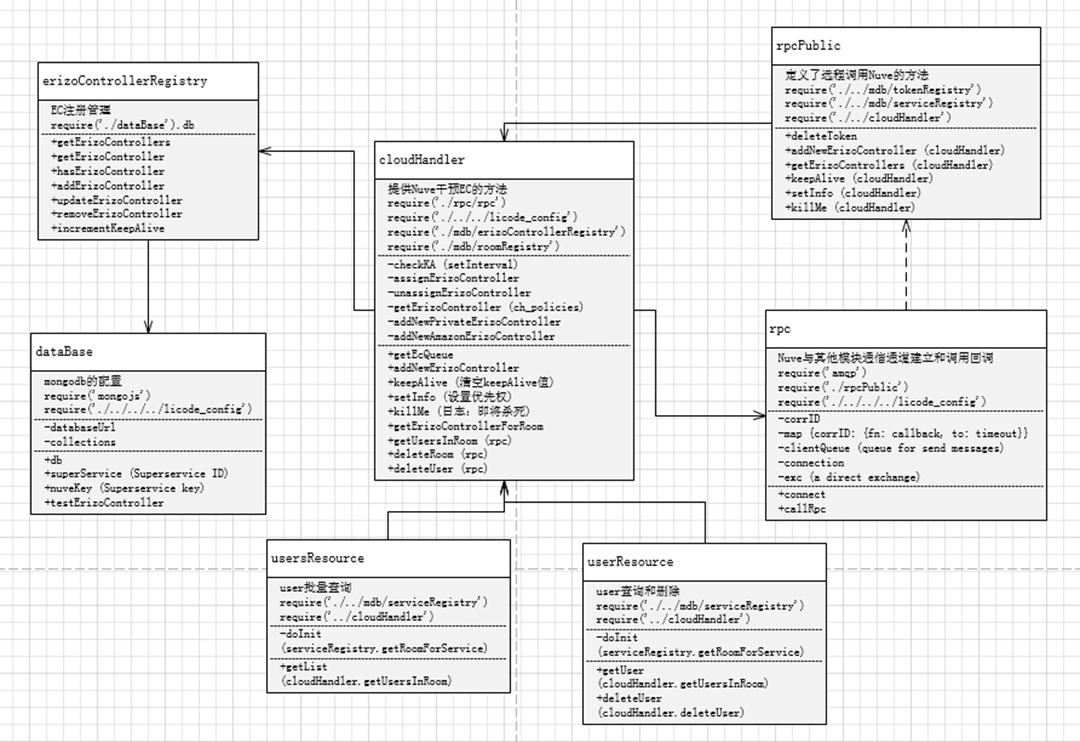
cloudHandler提供了nuve对EC的调用:获取房间中的所有用户,删除房间,删除指定用户;以及EC对nuve的调用:删除token,EC的添加、状态更新,删除以及保活。
调用方法通过RPCMQ实现,他们共同维护了两个队列,队列A用来传递调用消息,Nuve发布调用消息后,并且会维护一个调用方法和回调函数的字典;EC从队列A中获取调用消息后执行调用方法,并将结果消息push进队列B;Nuve从队列B中获取调用结果消息,并从字典中得到回调函数并执行callback,删除对应字典值。
2.3服务、房间、用户管理
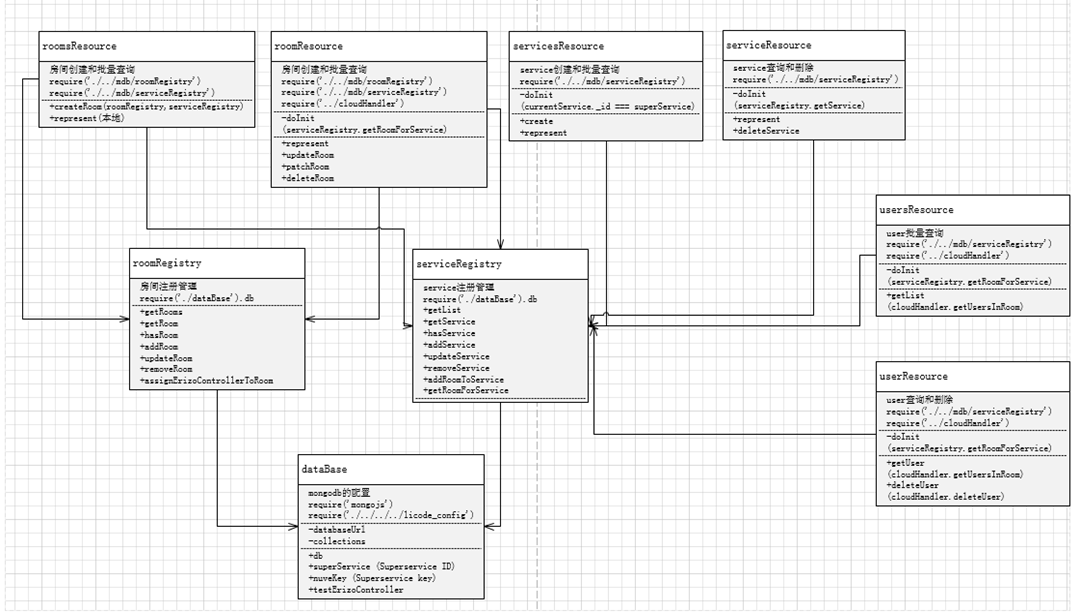
1.只有superService才有权限进行service的相关操作,即配置文件中的superService = config.nuve.superserviceID
2.在room模块中currentService即当前请求的service,会维护一个rooms列表,且创建房间的时候可携带房间的媒体信息:room.mediaConfiguration
3.Nuve中的user管理仅仅提供查询和删除功能,通过房间id,对EC发出获取当前房间用户信息,或者删除该用户
room {name: '', [p2p: bool], [data: {}], _id: ObjectId}
service {name: '', key: '', rooms: Array[room], testRoom: room, testToken: token, _id: ObjectId}
token {host: '', userName: '', room: '', role: '', service: '', creationDate: Date(), [use: int], [p2p: bool], _id: ObjectId}
2.4总结
Nuve功能相当于一个负载均衡,它负责入库的这些信息能够更好的辅助这个功能,ch_policies决定了负载均衡算法,默认取EC队列的首位。EC服务的启动并不归Nuve管理,EC创建成功后在Nuve中入库,Nuve仅仅维护列表以及保活,负责EC的分配。
3.ErizoController
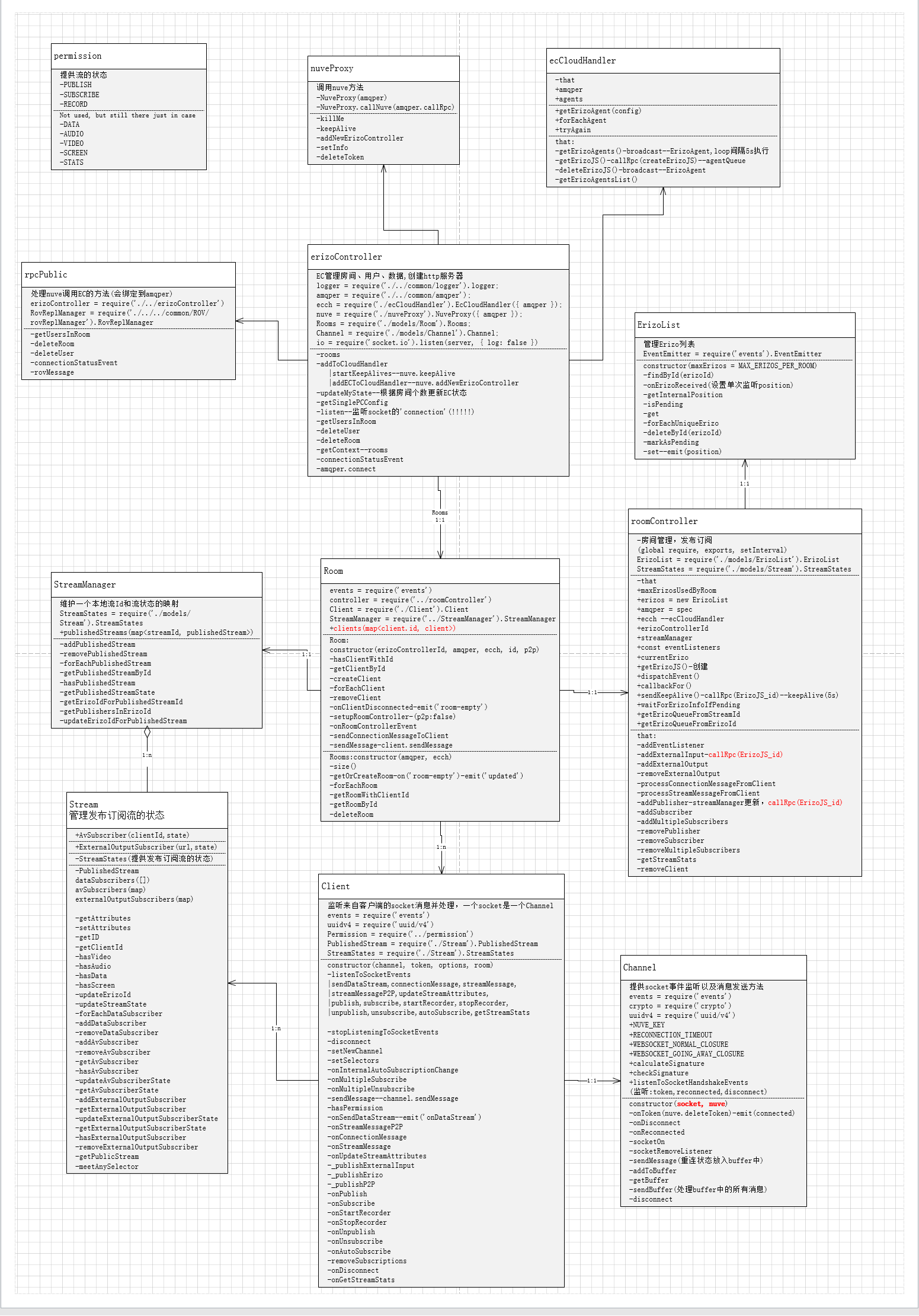
EC是一个service服务,会维护一个房间集合Rooms,创建成功后会在Nuve中进行注册,并且连接amqper
server.listen(global.config.erizoController.listen_port);
  // eslint-disable-next-line global-require, import/no-extraneous-dependencies
const io = require('socket.io').listen(server, { log: false });

io.set('transports', ['websocket']);
  const addECToCloudHandler = (attempt) => {
    if (attempt <= 0) {
      log.error('message: addECtoCloudHandler cloudHandler does not respond - fatal');
      process.exit(-1);
      return;
    }

    const controller = {
      cloudProvider: global.config.cloudProvider.name,
      ip: publicIP,
      hostname: global.config.erizoController.hostname,
      port: global.config.erizoController.port,
      ssl: global.config.erizoController.ssl,
    };
    nuve.addNewErizoController(controller).then((msg) => {
      log.info('message: succesfully added to cloudHandler');

      publicIP = msg.publicIP;
      myId = msg.id;
      myState = 2;

      startKeepAlives(myId, publicIP);
      callback('callback');
    }).catch((reason) => {
      if (reason === 'timeout') {
        log.warn('message: addECToCloudHandler cloudHandler does not respond, ' +
                     `attemptsLeft: ${attempt}`);

            // We'll try it more!
        setTimeout(() => {
          attempt -= 1;
          addECToCloudHandler(attempt);
        }, 3000);
      } else {
        log.error('message: cannot contact cloudHandler');
      }
    });
  };
  addECToCloudHandler(5);
连接amqper即RPCMQ,此时会将Nuve对EC方法的调用绑定
amqper.connect(() => {
  try {
    rooms.on('updated', updateMyState);
    amqper.setPublicRPC(rpcPublic);

    addToCloudHandler(() => {
      const rpcID = `erizoController_${myId}`;
      amqper.bind(rpcID, listen);
    });
  } catch (error) {
    log.info(`message: Error in Erizo Controller, ${logger.objectToLog(error)}`);
  }
});
在Nuve注册成功后回调会新建一个RPCMQ消息消费队列,同时会对EC服务端口监听“connection”消息,此时会新建房间(若房间已经存在即加入反那个房间),并新建socket连接和client。
const listen = () => {
  io.sockets.on('connection', (socket) => {
    log.info(`message: socket connected, socketId: ${socket.id}`);

    const channel = new Channel(socket, nuve);

    channel.on('connected', (token, options, callback) => {
      options = options || {};
      try {
        const room = rooms.getOrCreateRoom(myId, token.room, token.p2p);
        options.singlePC = getSinglePCConfig(options.singlePC);
        const client = room.createClient(channel, token, options);
        log.info(`message: client connected, clientId: ${client.id}, ` +
            `singlePC: ${options.singlePC}`);
        if (!room.p2p && global.config.erizoController.report.session_events) {
          const timeStamp = new Date();
          amqper.broadcast('event', { room: room.id,
            user: client.id,
            type: 'user_connection',
            timestamp: timeStamp.getTime() });
        }

        const streamList = [];
        room.streamManager.forEachPublishedStream((stream) => {
          streamList.push(stream.getPublicStream());
        });

        callback('success', { streams: streamList,
          id: room.id,
          clientId: client.id,
          singlePC: options.singlePC,
          p2p: room.p2p,
          defaultVideoBW: global.config.erizoController.defaultVideoBW,
          maxVideoBW: global.config.erizoController.maxVideoBW,
          iceServers: global.config.erizoController.iceServers });
      } catch (e) {
        log.warn('message: error creating Room or Client, error:', e);
      }
    });

    channel.on('reconnected', (clientId) => {
      rooms.forEachRoom((room) => {
        const client = room.getClientById(clientId);
        if (client !== undefined) {
          client.setNewChannel(channel);
        }
      });
    });

    socket.channel = channel;
  });
};
client相当于客户端中的用户,它会根据EC新建的channel监听来自客户端的socket消息,客户端的信令消息就是在这里进行处理的。client监听到事件后会通过room.controller(即roomController)中的方法进行具体实现。
listenToSocketEvents() {
    log.debug(`message: Adding listeners to socket events, client.id: ${this.id}`);
    this.socketEventListeners.set('sendDataStream', this.onSendDataStream.bind(this));
    this.socketEventListeners.set('connectionMessage', this.onConnectionMessage.bind(this));
    this.socketEventListeners.set('streamMessage', this.onStreamMessage.bind(this));
    this.socketEventListeners.set('streamMessageP2P', this.onStreamMessageP2P.bind(this));
    this.socketEventListeners.set('updateStreamAttributes', this.onUpdateStreamAttributes.bind(this));
    this.socketEventListeners.set('publish', this.onPublish.bind(this));
    this.socketEventListeners.set('subscribe', this.onSubscribe.bind(this));
    this.socketEventListeners.set('startRecorder', this.onStartRecorder.bind(this));
    this.socketEventListeners.set('stopRecorder', this.onStopRecorder.bind(this));
    this.socketEventListeners.set('unpublish', this.onUnpublish.bind(this));
    this.socketEventListeners.set('unsubscribe', this.onUnsubscribe.bind(this));
    this.socketEventListeners.set('autoSubscribe', this.onAutoSubscribe.bind(this));
    this.socketEventListeners.set('getStreamStats', this.onGetStreamStats.bind(this));
    this.socketEventListeners.forEach((value, key) => {
      this.channel.socketOn(key, value);
    });
    this.channel.on('disconnect', this.onDisconnect.bind(this));
  }
  stopListeningToSocketEvents() {
    log.debug(`message: Removing listeners to socket events, client.id: ${this.id}`);
    this.socketEventListeners.forEach((value, key) => {
      this.channel.socketRemoveListener(key, value);
    });
  }

  disconnect() {
    this.stopListeningToSocketEvents();
    this.channel.disconnect();
  }
ecCloudHandler负责EC对ErizoAgent的分配(负载均衡),amqper会对绑定到MQ上的所有“ErizoAgent”消息队列定时广播获取新建的ErizoAgent并放入ErizoAgent列表中。同时负责向ErizoAgent申请创建ErizoJS和删除ErizoJS。
that.getErizoJS = (agentId, internalId, callback) => {
    let agentQueue = 'ErizoAgent';

    if (getErizoAgent) {
      agentQueue = getErizoAgent(agents, agentId);
    }

    log.info(`message: createErizoJS, agentId: ${agentQueue}`);

    amqper.callRpc(agentQueue, 'createErizoJS', [internalId], { callback(resp) {
roomController中会创建一个ErizoList,用于EC这边erizo的分配以及erizo状态的维护以及保活。同时roomController会通过MQ调用ErizoJS的方法。
erizoPosition->erizo(undefine)->ecch.getErizoJS->分配Agent->Agent创建erizo
const erizos = new ErizoList(maxErizosUsedByRoom);
..........
ErizoJS保活
const sendKeepAlive = () => {
    erizos.forEachUniqueErizo((erizo) => {
      const erizoId = erizo.erizoId;
      amqper.callRpc(`ErizoJS_${erizoId}`, 'keepAlive', [], { callback: callbackFor(erizoId) });
    });
  };
setInterval(sendKeepAlive, KEEPALIVE_INTERVAL);
........
通过ecch申请创建ErizoJS
  getErizoJS = (callback, previousPosition = undefined) => {
    let agentId;
    let erizoIdForAgent;
    const erizoPosition = previousPosition !== undefined ? previousPosition : currentErizo += 1;

    if (waitForErizoInfoIfPending(erizoPosition, callback)) {
      return;
    }

    const erizo = erizos.get(erizoPosition);
    if (!erizo.erizoId) {
      erizos.markAsPending(erizoPosition);
    } else {
      agentId = erizo.agentId;
      erizoIdForAgent = erizo.erizoIdForAgent;
    }

    log.debug(`message: Getting ErizoJS, agentId: ${agentId}, ` +
            `erizoIdForAgent: ${erizoIdForAgent}`);
    ecch.getErizoJS(agentId, erizoIdForAgent, (gotErizoId, gotAgentId, gotErizoIdForAgent) => {
      const theErizo = erizos.get(erizoPosition);
      if (!theErizo.erizoId && gotErizoId !== 'timeout') {
        erizos.set(erizoPosition, gotErizoId, gotAgentId, gotErizoIdForAgent);
      } else if (theErizo.erizoId) {
        theErizo.agentId = gotAgentId;
        theErizo.erizoIdForAgent = gotErizoIdForAgent;
      }
      callback(gotErizoId, gotAgentId, gotErizoIdForAgent);
    });
  };
总结:
ErizoController是一个信令服务器,且负责erizo的负载均衡,分配erizoJS应该在哪个Agent上创建,client监听客户端socket连接,通过roomController调用erizo。
4.ErizoAgent
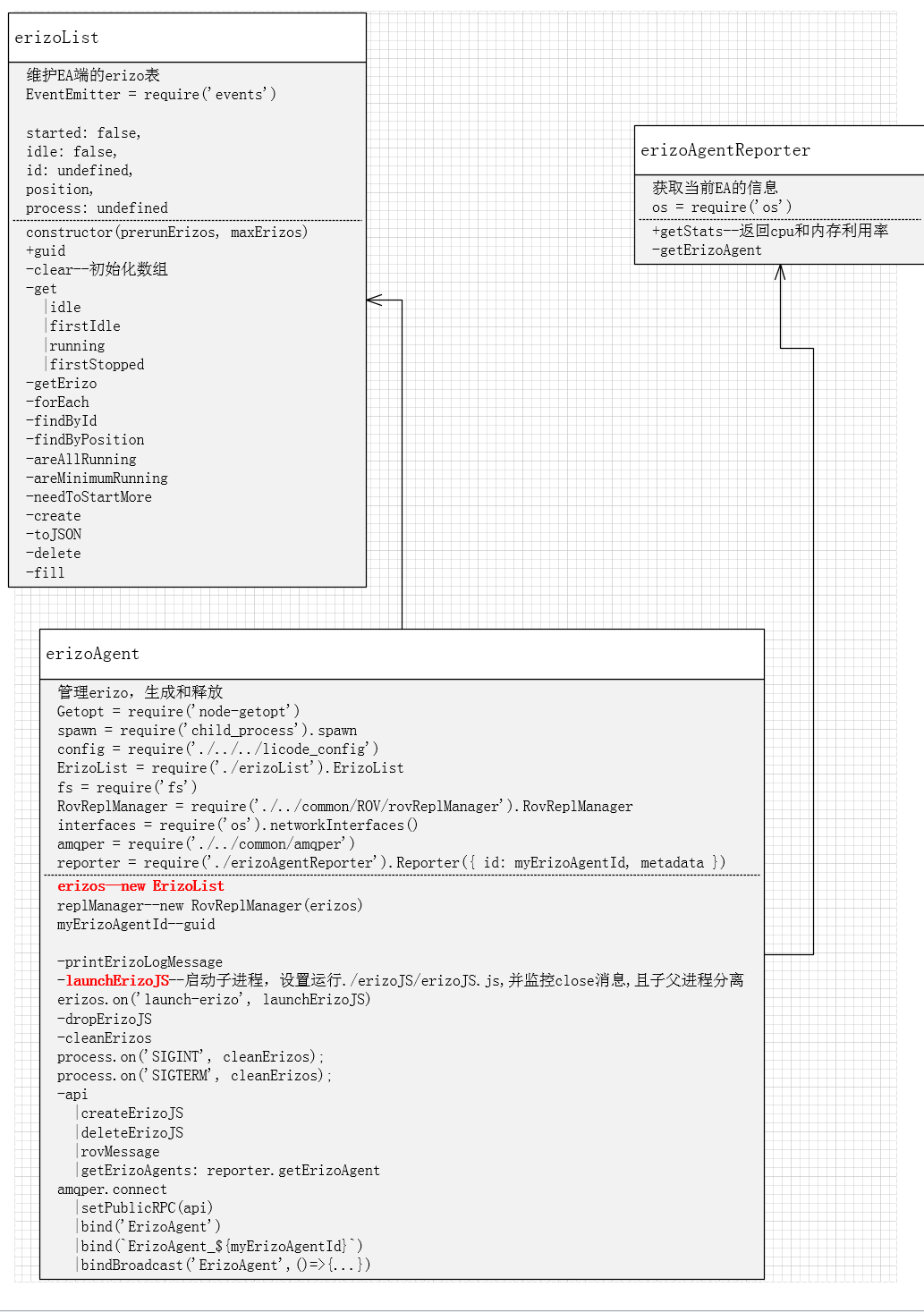
ErizoAgent是erizoJS的代理,代理启动后会被EC定时扫描到并存入EC的Agent列表中,然后它会被分配给不同的使用者,监听ErizoJS的创建和删除申请,erizoJS的创建就是Agent启动子进程运行erizoJS主程序(父子进程会分离异步)。
const launchErizoJS = (erizo) => {
  const id = erizo.id;
  log.debug(`message: launching ErizoJS, erizoId: ${id}`);
  let erizoProcess; let out; let
    err;
  const erizoLaunchOptions = ['./../erizoJS/erizoJS.js', id, privateIP, publicIP];
  if (global.config.erizoAgent.launchDebugErizoJS) {
    erizoLaunchOptions.push('-d');
  }

  if (global.config.erizoAgent.useIndividualLogFiles) {
    out = fs.openSync(`${global.config.erizoAgent.instanceLogDir}/erizo-${id}.log`, 'a');
    err = fs.openSync(`${global.config.erizoAgent.instanceLogDir}/erizo-${id}.log`, 'a');
    erizoProcess = spawn(LAUNCH_SCRIPT, erizoLaunchOptions,
      { detached: true, stdio: ['ignore', out, err] });
  } else {
    erizoProcess = spawn(LAUNCH_SCRIPT, erizoLaunchOptions,
      { detached: true, stdio: ['ignore', 'pipe', 'pipe'] });
    erizoProcess.stdout.setEncoding('utf8');
    erizoProcess.stdout.on('data', (message) => {
      printErizoLogMessage(`[erizo-${id}]`, message.replace(/\n$/, ''));
    });
    erizoProcess.stderr.setEncoding('utf8');
    erizoProcess.stderr.on('data', (message) => {
      printErizoLogMessage(`[erizo-${id}]`, message.replace(/\n$/, ''));
    });
  }
  erizoProcess.unref();
  erizoProcess.on('close', () => {
    log.info(`message: closed, erizoId: ${id}`);
    erizos.delete(id);

    if (out !== undefined) {
      fs.close(out, (message) => {
        if (message) {
          log.error('message: error closing log file, ',
                              `erizoId: ${id}`, 'error:', message);
        }
      });
    }

    if (err !== undefined) {
      fs.close(err, (message) => {
        if (message) {
          log.error('message: error closing log file, ',
                              `erizoId: ${id}`, 'error:', message);
        }
      });
    }
    erizos.fill();
  });
  log.info(`message: launched new ErizoJS, erizoId: ${id}`);
  // eslint-disable-next-line no-param-reassign
  erizo.process = erizoProcess;
};
5.ErizoJS
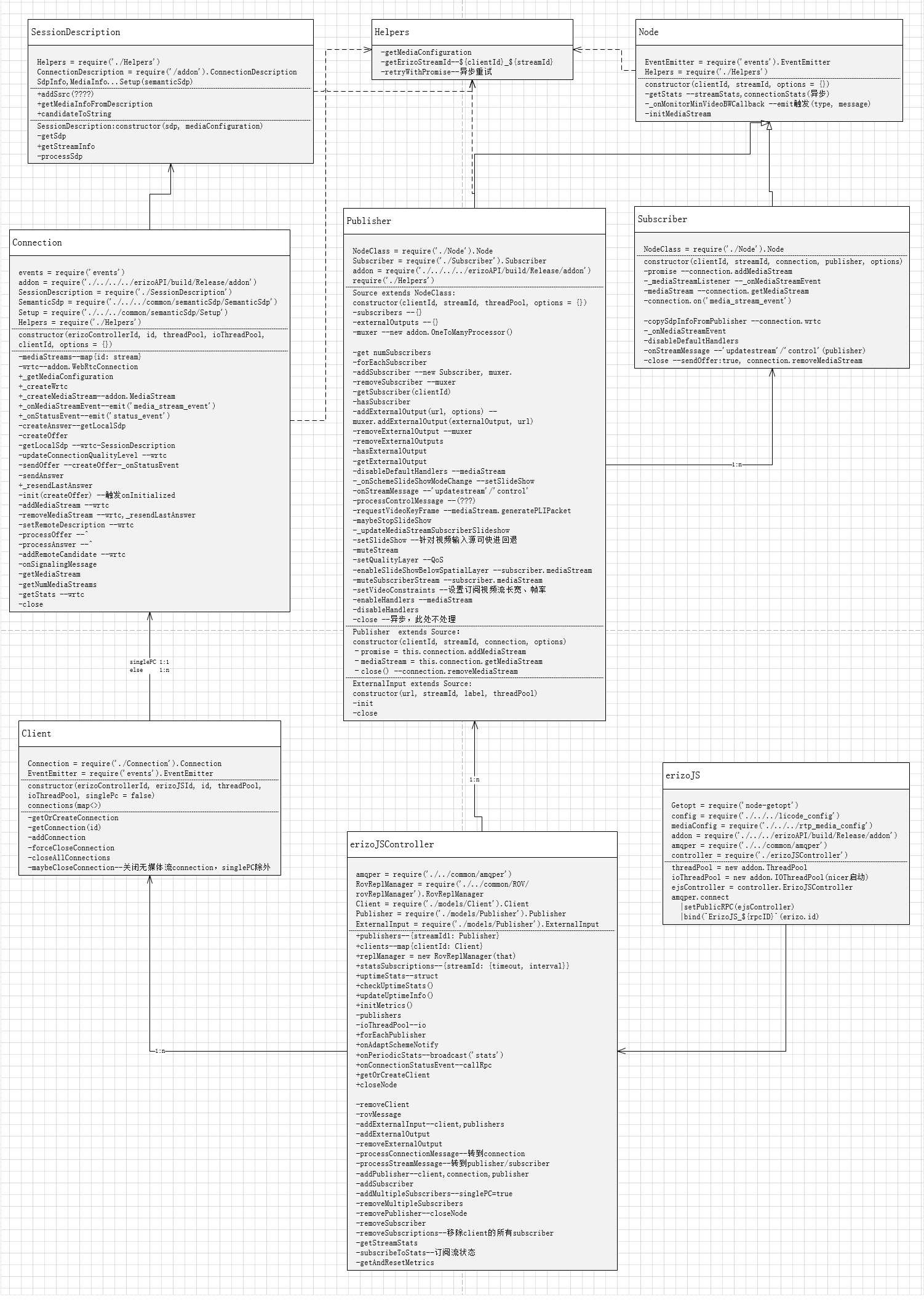
在erizoJS中client依然是与用户一一对应,与EC中的操作是异步的,只有在开始推流即addPublisher的时候才会将对应的client创建,并为对应的stream建立connection,在非singlePC模式下,每一个stream都会与客户端建立一个流连接,每一个输入流是一个Publisher,订阅者是Subscriber,一个client会有多个Publisher,而每个Publisher会有多个Subscriber,每个Publisher都会有一个媒体转发器OneToManyProcessor。底层的C++ erizo实现了 stream connection的建立,以及媒体转发和带宽控制。
  /*
   * Adds a publisher to the room. This creates a new OneToManyProcessor
   * and a new WebRtcConnection. This WebRtcConnection will be the publisher
   * of the OneToManyProcessor.
   */
  that.addPublisher = (erizoControllerId, clientId, streamId, options, callbackRpc) => {
    updateUptimeInfo();
    let publisher;
    log.info('addPublisher, clientId', clientId, 'streamId', streamId);
    const client = getOrCreateClient(erizoControllerId, clientId, options.singlePC);

    if (publishers[streamId] === undefined) {
      // eslint-disable-next-line no-param-reassign
      options.publicIP = that.publicIP;
      // eslint-disable-next-line no-param-reassign
      options.privateRegexp = that.privateRegexp;
      //新建connection的时候会在C++层建立WebRtcConnection,附带的有媒体设置消息,
      //同时会创建mediaStream,同时维护一个mediaStream字典
      const connection = client.getOrCreateConnection(options);
      log.info('message: Adding publisher, ' +
        `clientId: ${clientId}, ` +
        `streamId: ${streamId}`,
        logger.objectToLog(options),
        logger.objectToLog(options.metadata));
      publisher = new Publisher(clientId, streamId, connection, options);
      publishers[streamId] = publisher;
      publisher.initMediaStream();
      publisher.on('callback', onAdaptSchemeNotify.bind(this, callbackRpc));
      publisher.on('periodic_stats', onPeriodicStats.bind(this, streamId, undefined));
      publisher.promise.then(() => {
        //更新connection状态并初始化,options.createOffer=true就会创建offer,
        //并且在connection状态到达onInitialized/onGathered的时候发送offer
        connection.init(options.createOffer);
      });
      connection.onInitialized.then(() => {
        callbackRpc('callback', { type: 'initializing', connectionId: connection.id });
      });
      connection.onReady.then(() => {
        callbackRpc('callback', { type: 'ready' });
      });
      connection.onStarted.then(() => {
        callbackRpc('callback', { type: 'started' });
      });
      if (options.createOffer) {
        let onEvent;
        if (options.trickleIce) {
          onEvent = connection.onInitialized;
        } else {
          onEvent = connection.onGathered;
        }
        onEvent.then(() => {
          connection.sendOffer();
        });
      }
    } else {
      publisher = publishers[streamId];
      if (publisher.numSubscribers === 0) {
        log.warn('message: publisher already set but no subscribers will ignore, ' +
          `code: ${WARN_CONFLICT}, streamId: ${streamId}`,
          logger.objectToLog(options.metadata));
      } else {
        log.warn('message: publisher already set has subscribers will ignore, ' +
          `code: ${WARN_CONFLICT}, streamId: ${streamId}`);
      }
    }
  };
6.时序图
(未完待续)