一、把下面这组数据进行处理,进行规则排序。

第一版代码:
|
1
2
3
4
5
6
7
8
9
10
11
12
13
14
15
16
17
18
19
20
21
22
23
24
25
26
27
28
29
30
31
32
33
34
35
36
37
38
39
40
41
42
43
44
45
46
47
48
49
50
51
52
53
54
55
56
57
|
#!/usr/local/python3/bin/python3#定义了一个函数,用来做数据的分隔符转换,保证数据风格的一致,才能有效排序。def sanitize(time_string):
if '-' in time_string:
splitter='-'
elif ':' in time_string:
splitter=':'
else:
return(time_string)
#将取到的一段数据,通过判断中定义的分割符切开为两组,分别报存到mins,secs变量中。 (mins,secs) = time_string.split(splitter)
#在返回结果的时候,完成字符串合并。 return(mins + '.' + secs)
#使用with open打开文件,和open不同于with open会自动关闭文件,不需要手动关闭。 with open('james') as jam:
data = jam.readline()
#把数据进行首尾去空格,使用,最为分隔符切分。 james1 = data.strip().split(',')
#这里也可以通过这种方式排序,在最后输出的时候,直接输出james2就可以了。#james2 = sorted(james1)with open('julie') as jul:
data = jul.readline()
julie1 = data.strip().split(',')
#julie2 = sorted(julie1)with open('mikey') as mik:
data = mik.readline()
mikey1 = data.strip().split(',')
#mikey2 = sorted(mikey1)with open('sarah') as sar:
data = sar.readline()
sarah1 = data.strip().split(',')
#sarah2 = sorted(sarah1)clean_james=[]
clean_julie=[]
clean_mikey=[]
clean_sarah=[]
#通过迭代每组数据,调用sanitize函数,再把转换好的数据添加到新的列表中,这样列表中的数据风格就是一致的。for each_t in james1:
clean_james.append(sanitize(each_t))
for each_t in julie1:
clean_julie.append(sanitize(each_t))
for each_t in mikey1:
clean_mikey.append(sanitize(each_t))
for each_t in sarah1:
clean_sarah.append(sanitize(each_t))
#输出新列表并排序print(sorted(clean_james))
print(sorted(clean_julie))
print(sorted(clean_mikey))
print(sorted(clean_sarah))
|
输出结果:

这就完成了规则排序。
二、需要给数据去重复,排序,只输出前三项数据。
第二版代码:
|
1
2
3
4
5
6
7
8
9
10
11
12
13
14
15
16
17
18
19
20
21
22
23
24
25
26
27
28
29
30
31
32
33
34
35
36
37
38
39
40
41
42
43
44
45
46
47
48
49
50
51
52
53
54
55
56
57
58
59
60
61
62
63
64
65
66
67
68
69
70
|
#!/usr/local/python3/bin/python3def sanitize(time_string):
if '-' in time_string:
splitter='-'
elif ':' in time_string:
splitter=':'
else:
return(time_string)
(mins,secs) = time_string.split(splitter)
return(mins + '.' + secs)
#定义函数来解决去除重复数据项的问题,此函数接受两个列表作为参数带入,当数据不存在新列表中就把数据添加到新列表,如果有存在则不会添加,代替了下面使用每个列表使用for迭代的方式,代码更简洁。 def pomoto(old_list,new_list):
for i in old_list:
if i not in new_list:
new_list.append(i)
with open('james') as jam:
data = jam.readline()
james1 = data.strip().split(',')
with open('julie') as jul:
data = jul.readline()
julie1 = data.strip().split(',')
with open('mikey') as mik:
data = mik.readline()
mikey1 = data.strip().split(',')
with open('sarah') as sar:
data = sar.readline()
sarah1 = data.strip().split(',')
unique_james = []
unique_julie = []
unique_sarah = []
unique_mikey = []
#从迭代的方式改为了列表推导的方式clean_james = sorted([sanitize(each_t) for each_t in james1])
clean_julie = sorted([sanitize(each_t) for each_t in julie1])
clean_mikey = sorted([sanitize(each_t) for each_t in mikey1])
clean_sarah = sorted([sanitize(each_t) for each_t in sarah1])
#调用函数完成去重复pomoto(clean_james,unique_james)pomoto(clean_julie,unique_julie)pomoto(clean_mikey,unique_mikey)pomoto(clean_sarah,unique_sarah)#每列表迭代方式的去重复#for i in clean_james:# if i not in unique_james:# unique_james.append(i)#for i in clean_julie:# if i not in unique_julie:# unique_julie.append(i)#for i in clean_mikey:# if i not in unique_mikey:# unique_mikey.append(i)#for i in clean_sarah:# if i not in unique_sarah:# unique_sarah.append(i)#输出去重复后的唯一新列表,只打印前三项数据print(unique_james[0:3])
print(unique_julie[0:3])
print(unique_mikey[0:3])
print(unique_sarah[0:3])
|
输出结果:
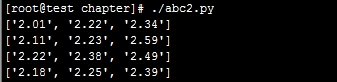
三、使用集合删除重复项,将重复的with open定义为函数,简洁代码,进行逆序排序,输出前三项。
第三版代码:
|
1
2
3
4
5
6
7
8
9
10
11
12
13
14
15
16
17
18
19
20
21
22
23
24
25
26
27
28
29
30
31
|
#!/usr/local/python3/bin/python3def sanitize(time_string):
if '-' in time_string:
splitter='-'
elif ':' in time_string:
splitter=':'
else:
return(time_string)
(mins,secs) = time_string.split(splitter)
return(mins + '.' + secs)
#定义函数打开文件获取数据返回,并加入了错误处理代码。def get_file_data(filename):
try:
with open(filename) as f:
data = f.readline()
return(data.strip().split(','))
except IOError as ioerr:
print('File error' + str(ioerr))
return(None)
#调用函数直接得到文件中经过切片后的数据。 james1 = get_file_data('james')
julie1 = get_file_data('julie')
mikey1 = get_file_data('mikey')
sarah1 = get_file_data('sarah')
print(sorted(set([sanitize(i) for i in james1]),reverse=True)[0:3])
print(sorted(set([sanitize(i) for i in julie1]),reverse=True)[0:3])
print(sorted(set([sanitize(i) for i in mikey1]),reverse=True)[0:3])
print(sorted(set([sanitize(i) for i in sarah1]),reverse=True)[0:3])
|
输出结果:
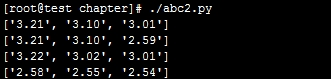
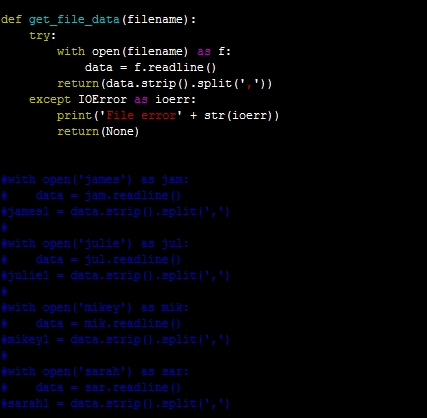
定义get_file_data函数代替了,多行的with open,使得代码简洁。
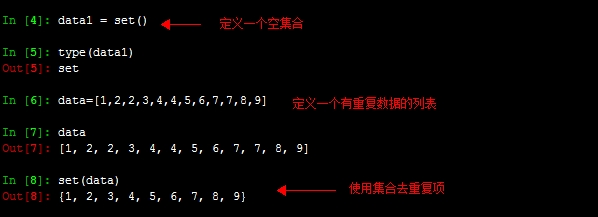
Python 集合数据结构:集合中的数据项是无序的,而且不允许重复的,这和我们数学中的集合很像。
最后print输出代码:

本文转自qw87112 51CTO博客,原文链接:http://blog.51cto.com/tchuairen/1678435